Unlocking 10X User Growth by Digitizing Testing Processes
TIMELINE
Jan 2022 - March 2022 (3 months)
TEAM
1 Designer (me 🌺)
1 Manager
SKILLS
Product Management
Product Design
Product Strategy
Interaction Design
Prototyping
User Research
my impact
Led Design of an End to End Platform to Automate Test Administration and Improve Efficiency
3 Days → Instantaneous
TIME TO MARK TESTS
100%
reduction in grading errors
10X
projected user growth
Context
Millie Group is an edtech startup that provides mock SAT testing sessions

Monthly Mock SAT Sessions through Zoom (Image from Millie's website)
Millie is an edtech startup that provides international tutoring and SAT prep. I worked specifically on the SAT Test Administration experience, transforming a manual, multi-platform workflow into Millie’s first digital product.
They want to expand beyond SAT testing to include internal testing for their tutoring services


Custom Tutoring
Aside from SAT testing, Millie also offers other types of tutoring services.
However, running a single test required an incredible amount of effort, up to a whole week can be used to complete one testing cycle
Pre-test setup took over a full day just to ensure proper sign ups and Zoom link creations. Post-test processing was even worse as grading was completely manual. Correcting scoring errors took over three full days.
⚠️ The current system imposes a direct constraint on test volume and service scalability, capping potential revenue
mission
This project was a blue-sky exploration with no constraints
defining success
During my project onboarding meeting, I defined what success looked like for the project
Enhance visuals
The current UI is messy and unstructured and requires extra time to navigate through
Reduce Hours to Complete Testing Cycle
The biggest bottleneck in growing revenue was the number of steps needed to complete one testing cycle
Upscale User Growth
By creating a more efficient process, we can expect to take on more students for each testing cycle, growing the user base
discovery
I conducted user interviews with admin staff to understand their tasks, desires, workflows, and frustrations
Understand the testing process, primary frustrations, and the role of the product in the testing process
Research objective
I also worked off of previous UXR insights and personas formed.

Snapshot of UXR Artifacts from Previous Research
research
Insight: Admins are working with multiple disconnected tools throughout the entire test cycle
High-Level Tool Ecosystem

The entire testing process was split across multiple platforms, forcing administrators into disjointed, manual workflows.
research
Insight: The biggest friction comes from having to import and export students' tests from the Millie platform to Excel and vice versa


Admins have to repeatedly upload and download materials
Admins have to compare student identification numbers, section scores, and subscores across multiple export files to confirm data integrity. This process happens hundreds of times for each session.
Admins have to manually enter students' grades into Excel for grading

Example of Student Test
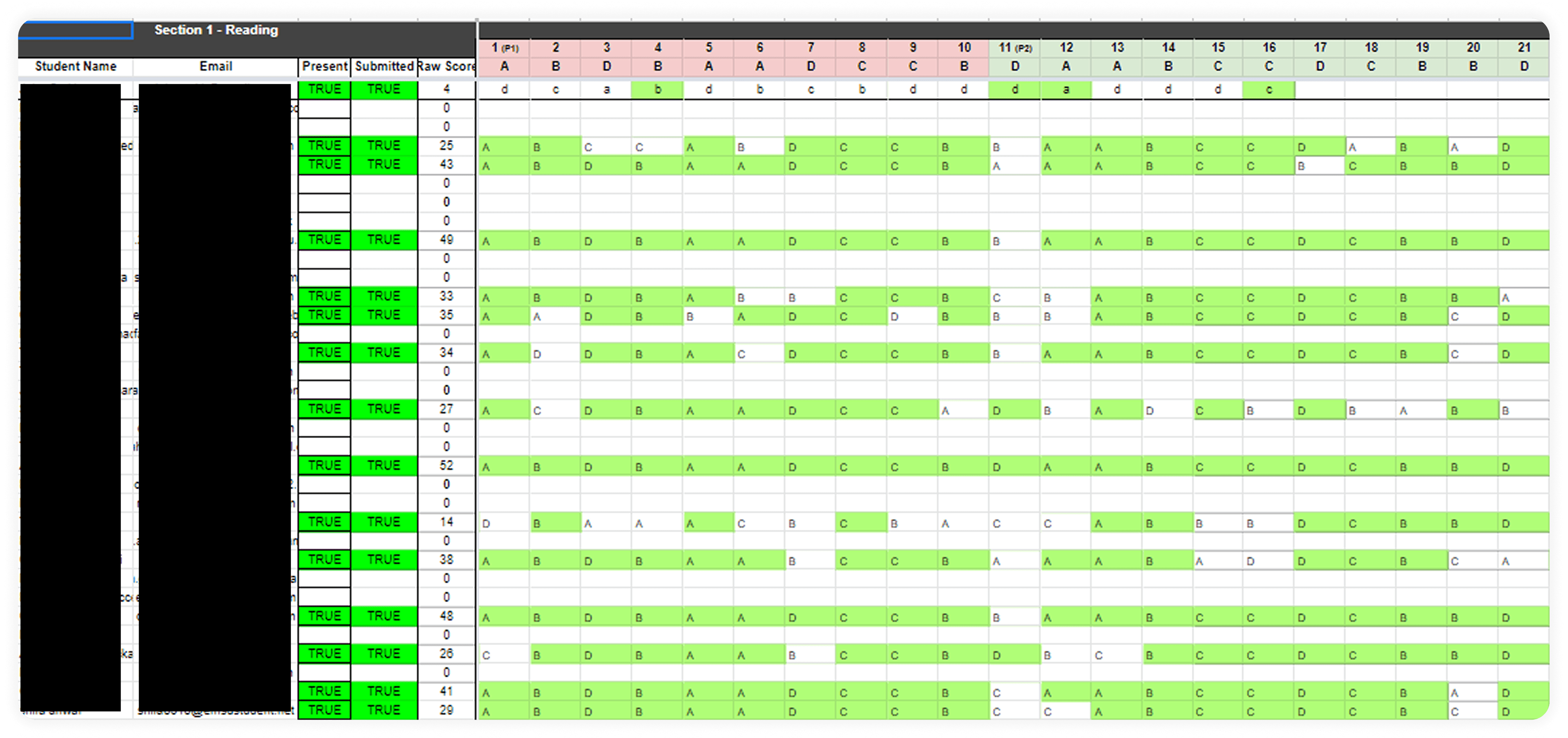
Grading on Excel
Due to the file format, Excel is unable to read students' answers, so admins have to manually enter each answer into Excel.
Each test cycle has a minimum of 150 students and Sometimes runs with 300+ students
300
students
x
98
questions
=
29,400
raw data points per session
≈
8 Hours
data entry
research
Insight: Admins have to reupload the same testing material as they reuse tests

Tests are uploaded manually
Admins have a database of tests that they cycle through for each session. Because the system fails to store or link past test configurations, admins must re-upload identical test files and answer keys.
They also have to reupload the same test material multiple times since one testing cycle can have multiple timeslots
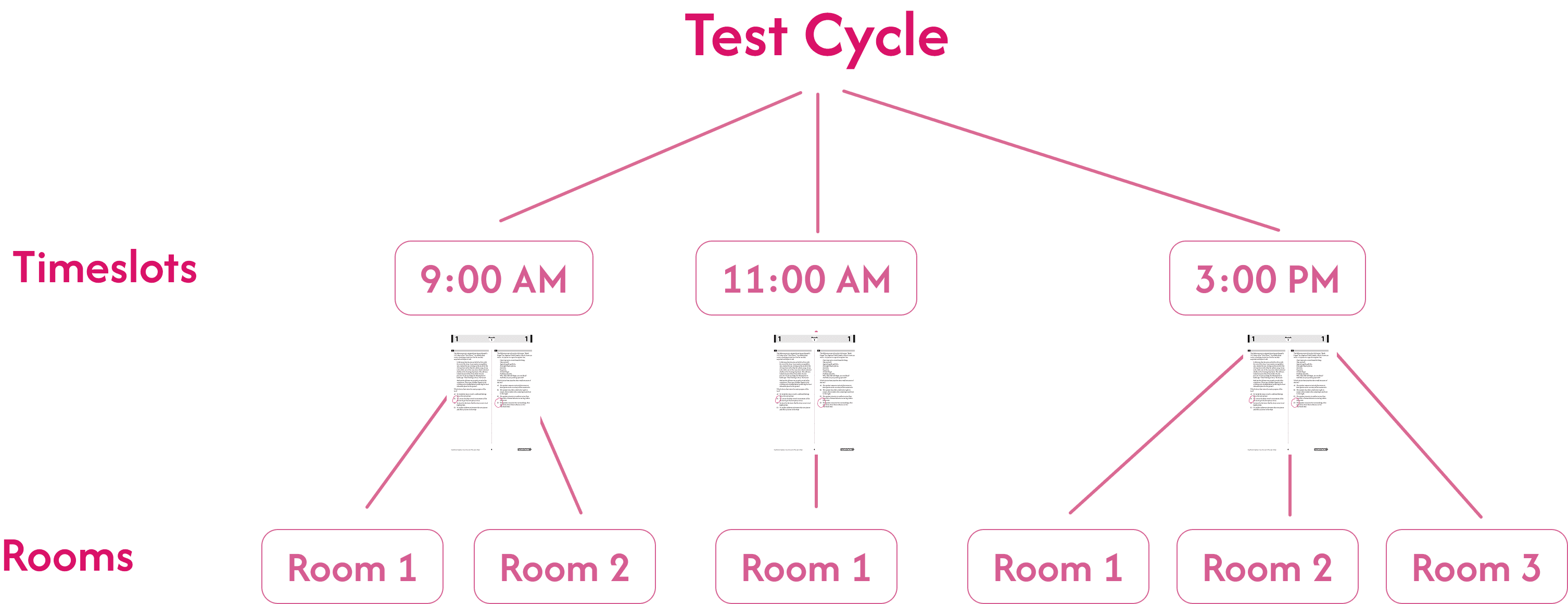
Same test is used across timeslots
Each timeslot is viewed as a separate test. Admins have to upload the same testing material for each timeslot.
In this example, admins have to upload the same materials 3 times
research
Insight: Testing environment is unable to fully mimic a SAT test with sections and section timings

No section timings available
Since the test is run through Zoom sessions, manually coordinating start/stop times for different sections is too tedious for admins. They also have no way to ensure that students do not skip ahead and view other sections.
ideation
I recognized that consolidating Excel-based workflows into the Millie platform could solve a lot of problems
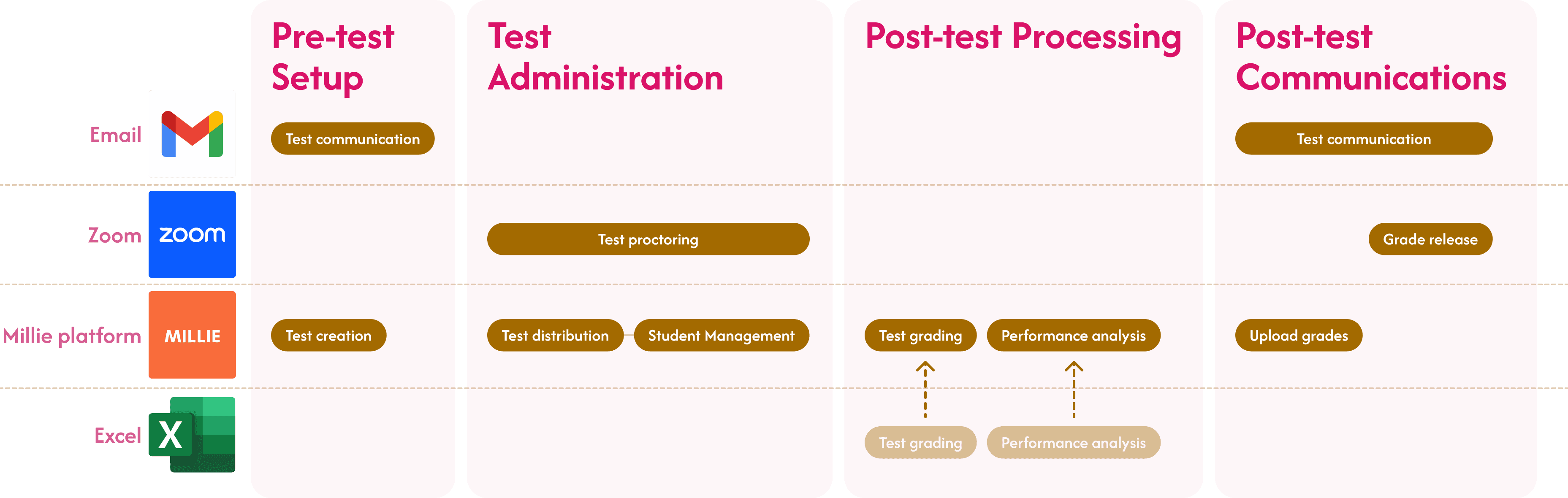
Consolidating Excel functionality into Millie
If we shifted the test taking process to take place primarily on the Millie platform, we can enable automated grading, and reduce redundant work with the potential to scale beyond SAT tests.
END TO END TEST CYCLE
Solution: Admins engage in a one-time process to create test templates with an electronic answer key
Custom Test Creation
Admins can create a template for each test which includes test questions and an answer key that can be reused for future tests.
This also allows Millie to scale for other types of tests, including custom tests for custom tutoring sessions
Admins complete test set-up through templates without needing to upload additional materials
Test Templates
Students can take tests natively through the platform

Student View of Test
Answers are graded automatically as the answer key has already been linked during test creation

Automatic Grading
simulate testing environment
Solution: Admins can set up sections and section timings to simulate real testing environments
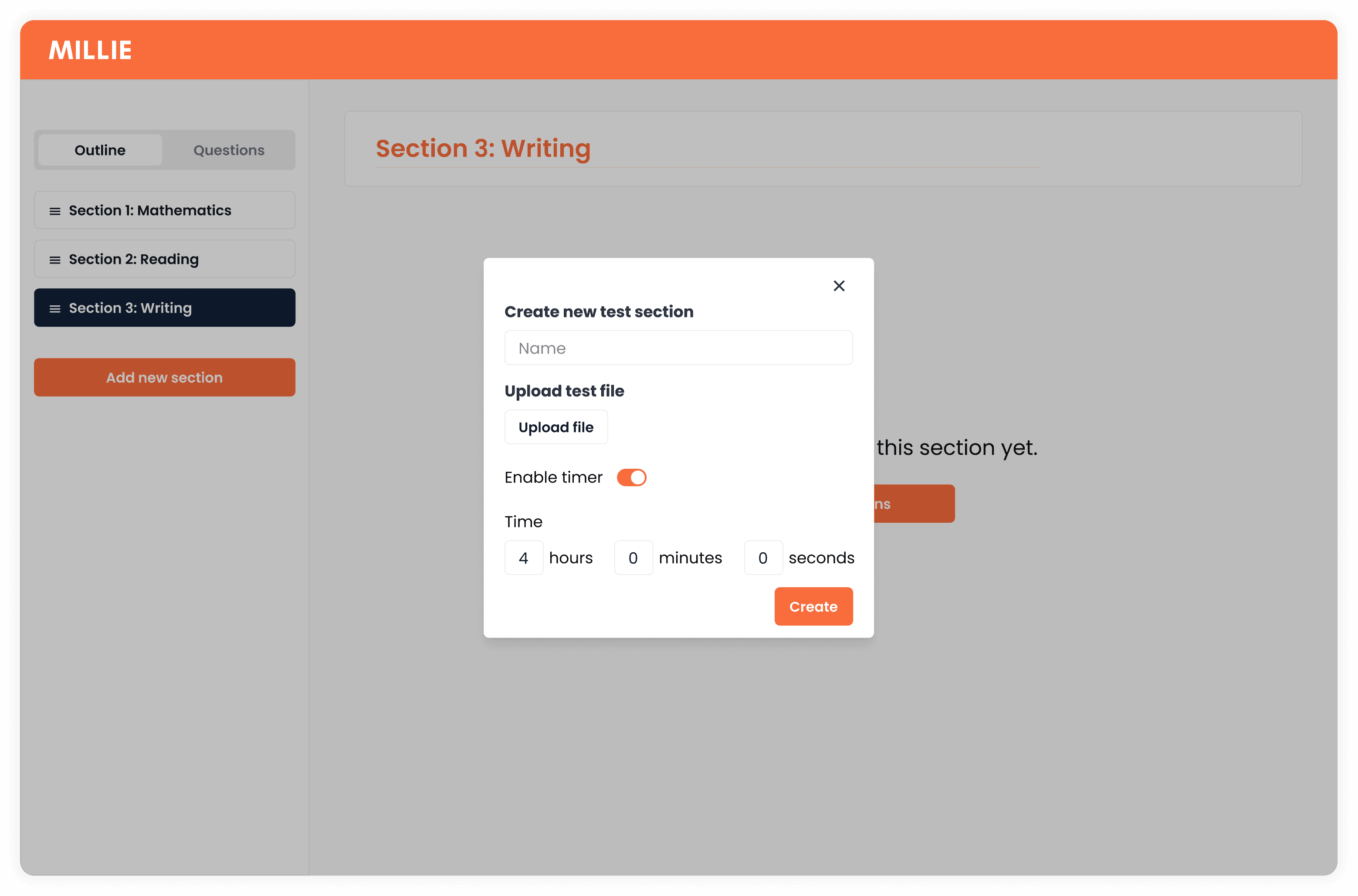

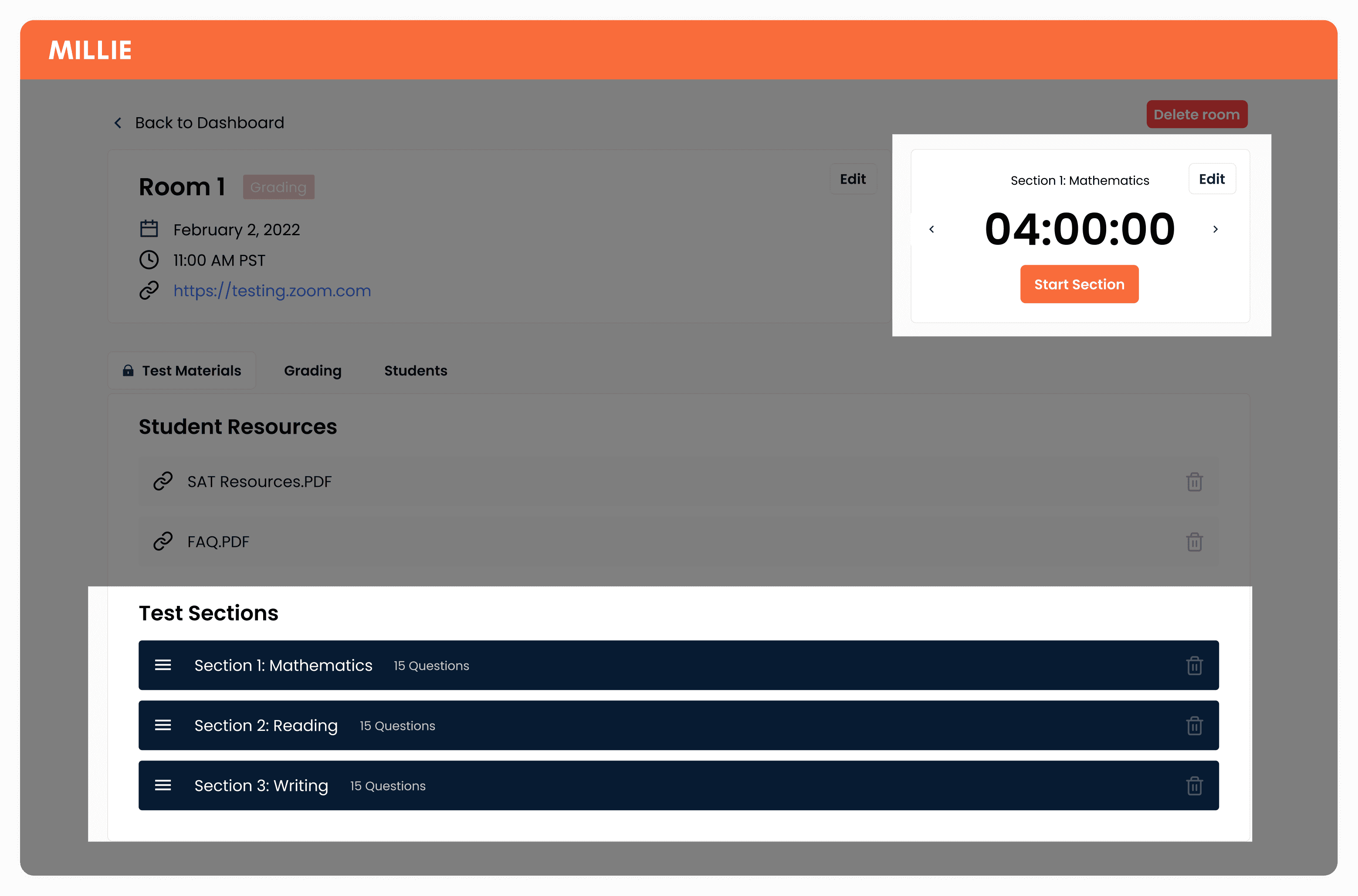
Sections and Section Timings
Admins can configure sequential sections and set optional duration limits for each section.
Students submit answers by section and do not have access to the next section until the next section begins
Student Submit By Section
logistics management
Solution: Structuring test architecture around a test cycle instead of individual tests
new Test Architecture
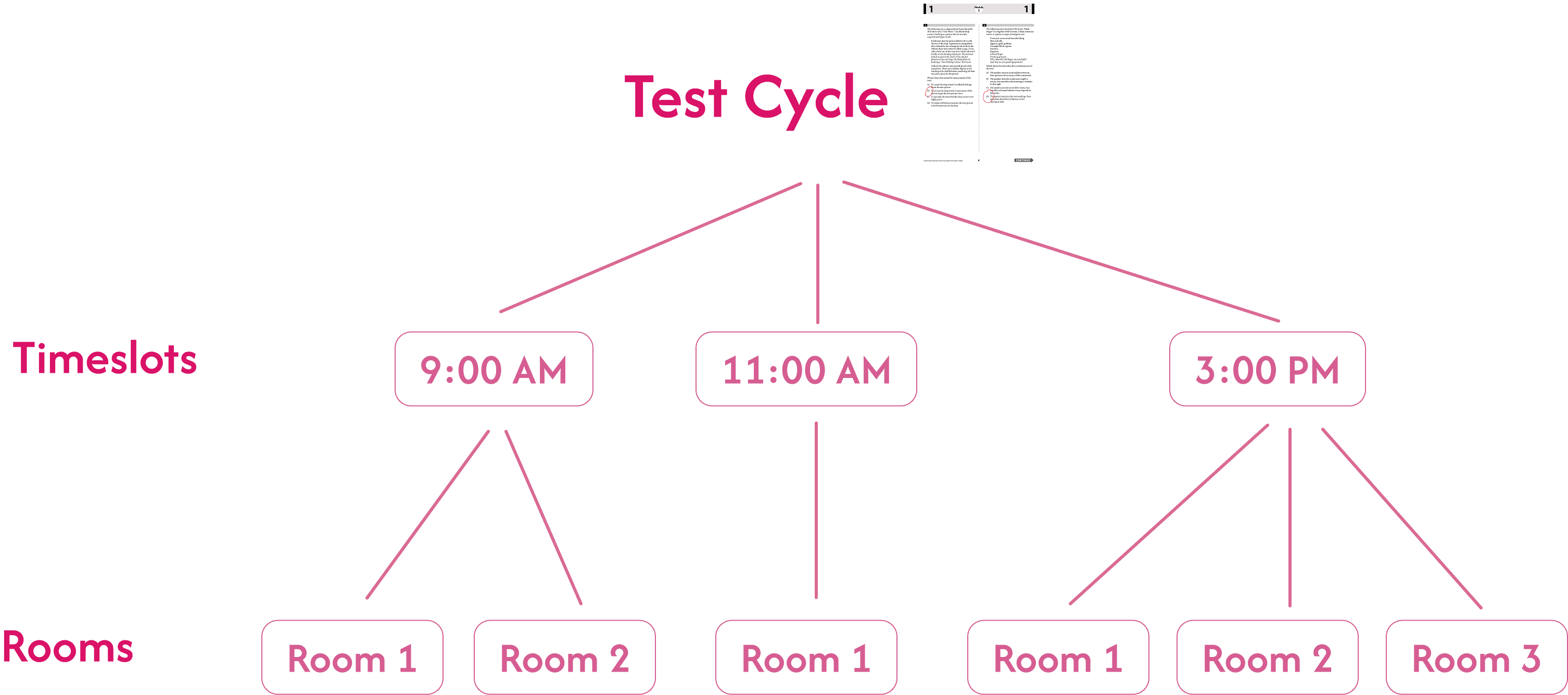
Old Test Architecture
Instead of having to manually re-upload files for every individual timeslot, treating the test cycle as the master ensures that any changes, such as adding a section time limit or updating an answer key, instantly syncs across all associated tests.
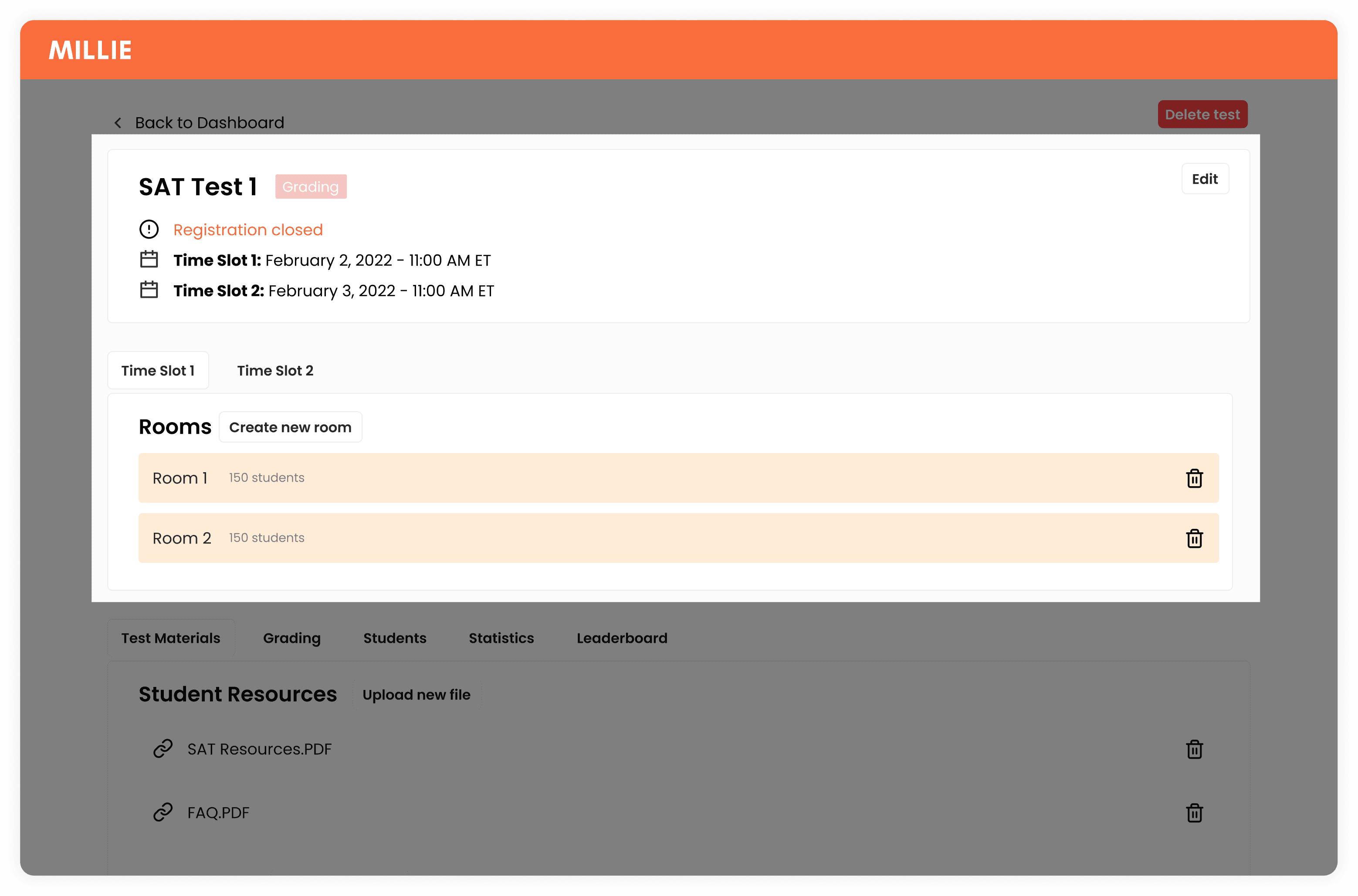
Timeslots and Rooms Sit Within a Master Test
PIVOTS!
Iteration: Test-level upload vs Section-level uploads

Test Materials Uploaded on the Test Level
Initially, I had test materials uploaded on the test level, with a page-level cutoff for each section to limit student access.
After discussion with CEO, section-level uploads have greater scalability as some tests might not require any uploaded materials
Final: Section-level uploads

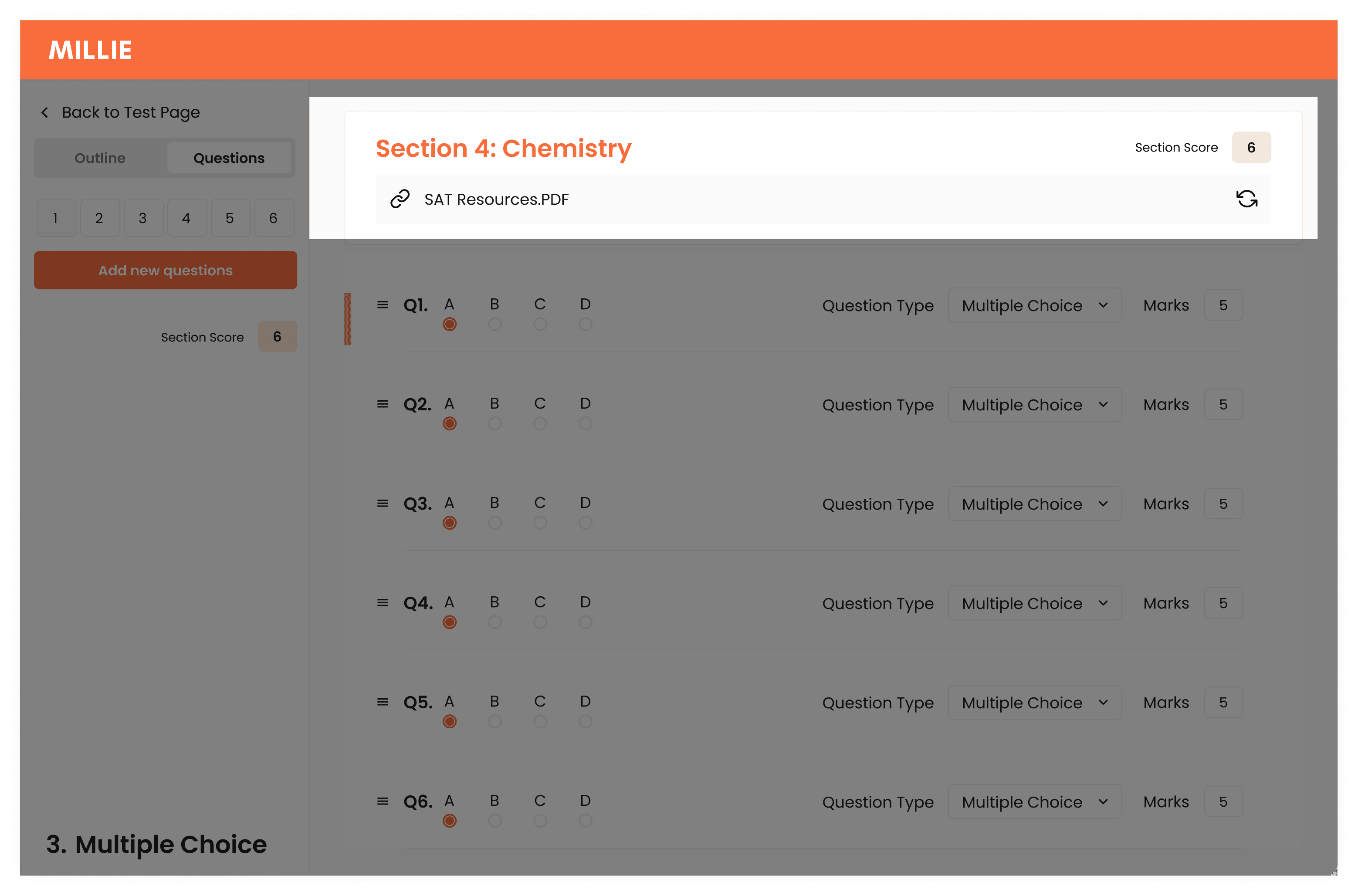
Test Materials Uploaded on the Section Level
scoping
Rather than attempting to build a fully automated test experience from day one, I created a feature prioritization list to center the scope around improving efficiency and reducing redundancy

Feature Prioritization List
documentation
I built a minimal design system by customizing Chakra UI with brand colors and custom components

Design System Sneakpeek
final hand-off
In addition to Figma, I compiled a 39 page document outlining end-to-end flows, error states, and limitations for non-technical users
Hand-off Document
Reflection
This project made me learn…
When scoping out the project, team members on the business team were reluctant to cut out features that would attract new users. However, it was impossible to design all features within the project timeline.
Clarifying business goals and feature prioritization using metrics and user interview insights made the communication between design and business a lot smoother.
🌺 Checkout my other projects!
#1 AIRMATRIX
🚀 SHIPPED